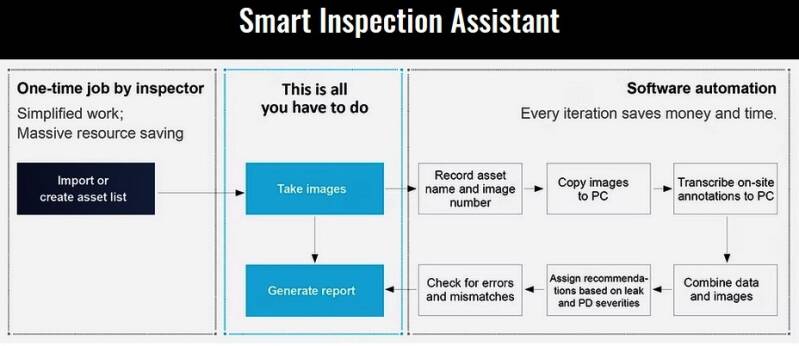

Ultrasound Analysis
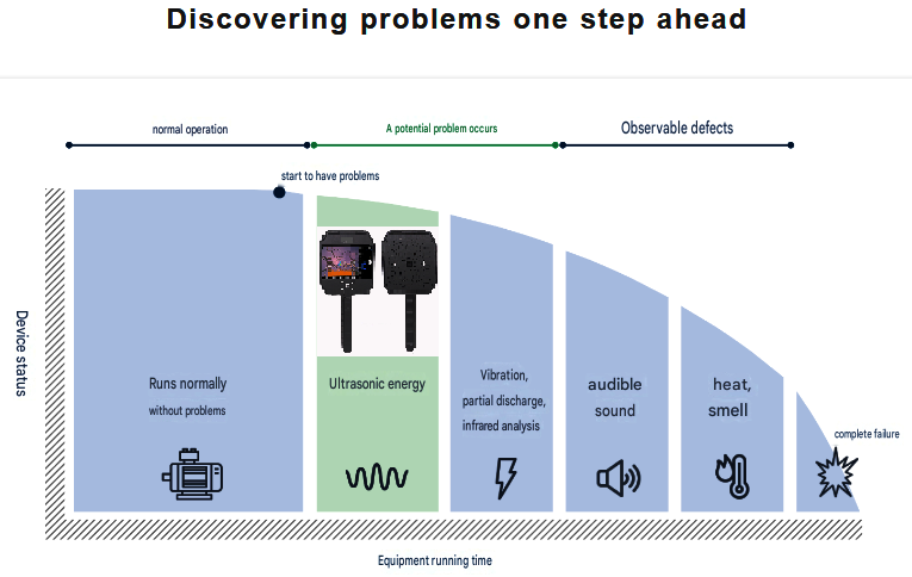
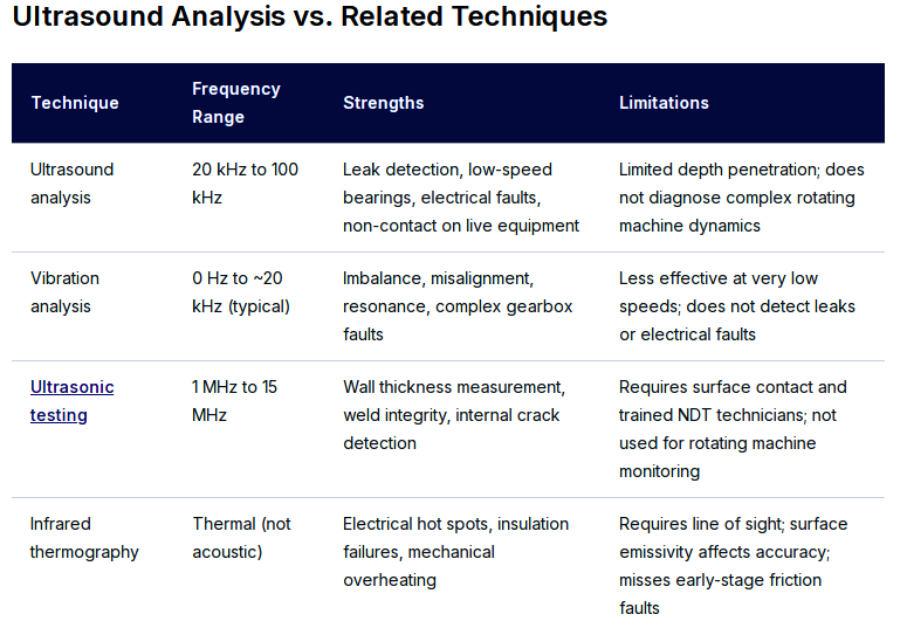
Ultrasound analysis is a predictive maintenance technique that uses high-frequency sound waves, typically between 20 kHz and 100 kHz, to detect mechanical, pneumatic, and electrical faults in industrial equipment before those faults lead to failure.
Key Takeaways
- Ultrasound analysis detects faults by capturing high-frequency sound waves that are inaudible to the human ear.
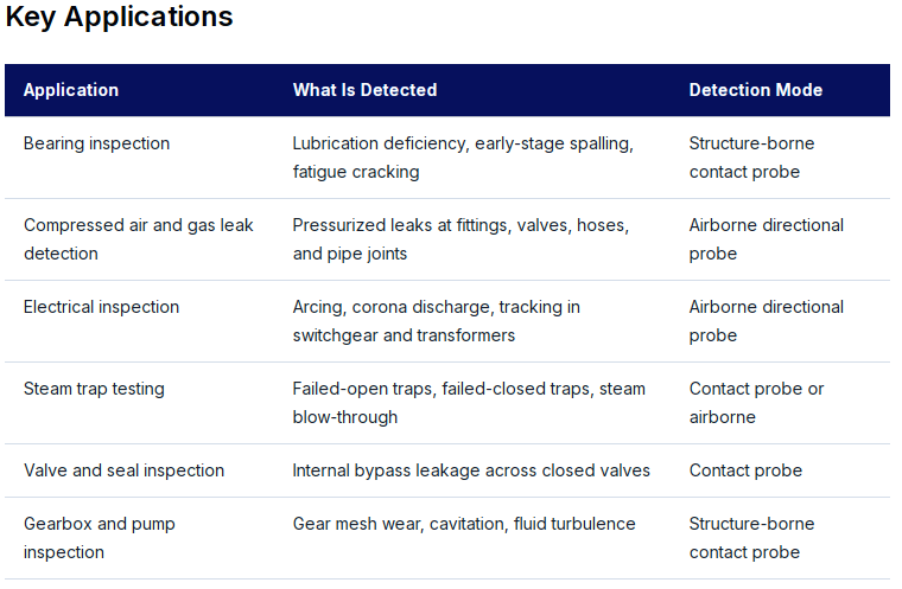
- It is effective for bearing inspection, compressed air leak detection, electrical fault identification, and steam trap testing.
- The technique is non-invasive and can be performed on live, energized equipment without interrupting production.
- Ultrasound and vibration analysis are complementary: ultrasound excels at low-speed bearings and leaks; vibration analysis covers complex rotating machinery dynamics.
- Trending ultrasound data over time is the foundation of a reliable predictive maintenance program using this method.
What Is Ultrasound Analysis?
Ultrasound analysis is a condition monitoring technique that translates high-frequency acoustic signals into data that maintenance teams can use to assess equipment health. The sound waves it captures are produced by turbulence, friction, and electrical discharge; all of these are present when machinery is operating outside normal parameters.
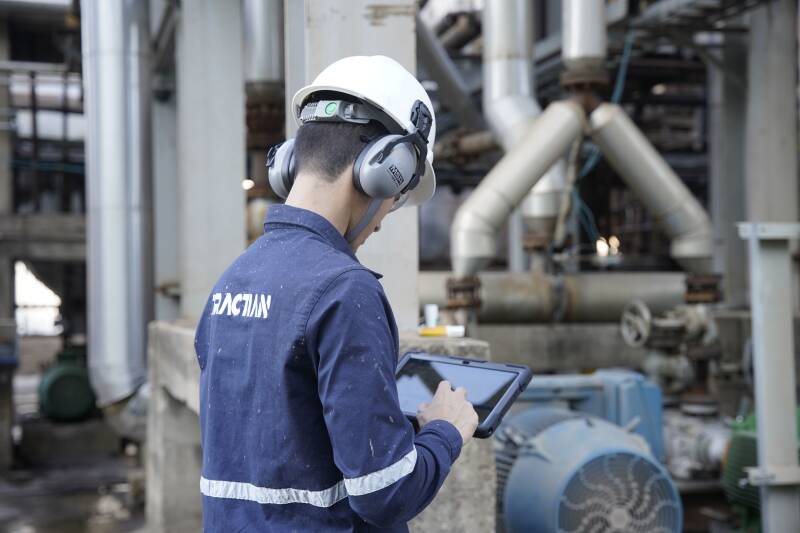
Unlike methods that require equipment to be taken offline, ultrasound inspection works on running assets. Technicians can scan bearings, valves, electrical panels, steam systems, and compressed air lines during normal production, making it one of the most practical tools in a predictive maintenance program.
The technique sits within the broader family of non-destructive testing methods, meaning it gathers diagnostic data without altering the asset in any way.


How Ultrasound Analysis Works
All friction, turbulence, and electrical discharge generate broadband sound energy. Some of that energy falls in the ultrasonic range, above 20 kHz, which human ears cannot detect. An ultrasonic detector captures this energy and converts it into an audible signal and a numerical reading that the technician can evaluate.
The process follows three steps:
-
Detection.
The inspector holds a directional probe near the asset. The detector heterodynes the ultrasonic signal down to an audible frequency so the technician can hear characteristic patterns: a regular ticking for a failing bearing, a hiss for a compressed air leak, a crackling sound for electrical arcing.Two modes of detection cover different fault types:
2. Measurement. The instrument records a decibel (dB) value representing the intensity of the signal. This number is compared against a baseline established during a healthy inspection or against manufacturer alarm thresholds. 3.Trending. Readings taken at regular intervals are plotted over time. A rising dB trend in a bearing, for example, indicates increasing friction and signals that a lubrication action or replacement is due before catastrophic failure occurs.- Airborne ultrasound captures sound propagating through air. It is used for leak detection and electrical inspection.
- Structure-borne ultrasound uses a contact probe placed directly on the asset surface. It is the primary method for bearing and mechanical inspection.
Ultrasound Analysis and Bearing Lubrication
One of the most widely adopted uses of ultrasound analysis is lubrication management. Over-lubrication and under-lubrication are both common causes of premature bearing failure, yet both are difficult to detect without an objective measurement.
With an ultrasonic detector, technicians establish a baseline dB reading for each bearing. As the bearing dries out, friction increases and the dB level rises. Grease is added in small increments while monitoring the dB reading in real time. When the reading returns to baseline, lubrication stops. This method prevents both under-greasing and the damage caused by over-packing, which can collapse bearing seals.
The same dB trending approach catches early fatigue damage. A bearing that begins to show a rising trend several weeks before audible noise or vibration analysis flags an anomaly gives the maintenance team a longer planning window for a scheduled replacement.
Ultrasound Analysis for Leak Detection
Compressed air leaks are a significant source of energy waste in industrial facilities. Studies consistently find that poorly maintained compressed air systems lose 20 to 30 percent of generated capacity through leaks, yet most leaks are inaudible on a noisy plant floor.
Ultrasonic detectors find leaks by picking up the high-frequency turbulence produced as pressurized air escapes through an orifice. The directional probe allows inspectors to scan entire pipe runs and pinpoint the exact location of each leak. Results are logged with GPS coordinates or equipment tag numbers and fed into a repair work order queue.
The same approach applies to vacuum systems, refrigerant lines, hydraulic systems, and any pressurized gas application. This makes leak detection one of the fastest-payback uses of ultrasound technology.

Electrical Ultrasound Inspection
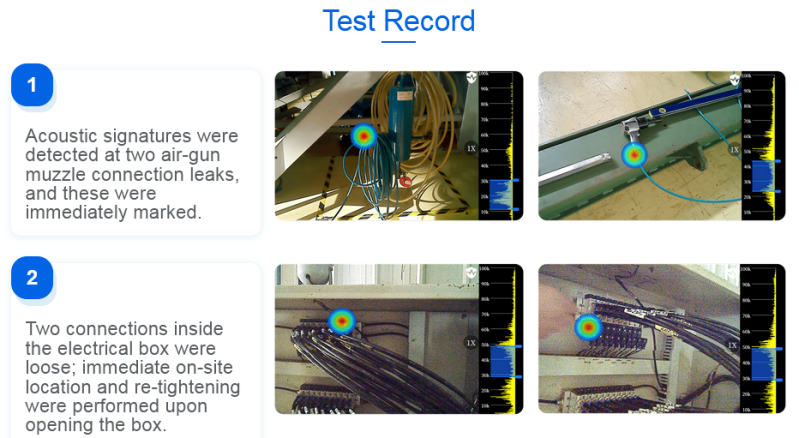
Electrical discharge faults produce acoustic energy in the ultrasonic range. Arcing, corona discharge, and tracking each have distinct sonic signatures that an experienced inspector can identify and differentiate using a heterodyne detector.
Electrical inspection with ultrasound is performed on energized equipment. Inspectors scan switchgear cabinets, transformers, bus bars, and insulators from a safe distance using a parabolic focusing attachment. Because the inspection does not require de-energizing the equipment, it eliminates the production loss associated with traditional electrical shutdown inspections.
Findings are typically combined with infrared thermography data to build a complete picture of electrical system health as part of a broader asset condition monitoring program
Acoustic Analysis
Definition, Methods and Industrial Applications
Definition: Acoustic analysis is the process of capturing, measuring, and interpreting sound and acoustic emission signals from industrial equipment to assess its condition and detect developing faults. Sound and vibration are byproducts of mechanical activity: rotating components, fluid flow, friction, and structural stress all produce characteristic acoustic signatures. When those signatures change, the change indicates a change in the underlying physical condition. Acoustic analysis translates those signals into actionable maintenance intelligence.
Key Takeaways
- Acoustic analysis captures and interprets sound signals from industrial equipment to identify fault conditions before they cause failures.
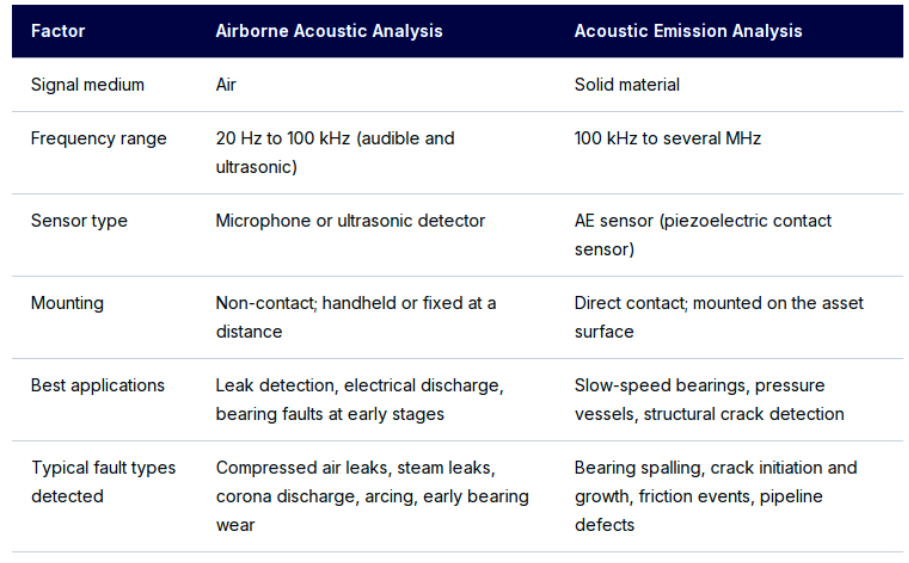
- The two main branches are airborne acoustic analysis (audible and ultrasonic sound in the air) and acoustic emission analysis (stress waves transmitted through solid material).
- Acoustic analysis is especially effective for detecting bearing faults, lubrication problems, leaks, electrical discharge, and structural cracks at early stages.
- It complements vibration analysis by detecting fault types and frequency ranges that accelerometer-based sensors may not capture.
- In a predictive maintenance program, acoustic analysis data feeds condition monitoring platforms alongside vibration, temperature, and current data to build a complete asset health picture
How Acoustic Analysis Works
Acoustic analysis follows a consistent signal chain regardless of the specific technique used. A transducer captures acoustic energy from the asset: this may be a microphone for audible airborne sound, an ultrasonic sensor for high-frequency airborne signals, or an acoustic emission sensor mounted directly on the equipment for structure-borne stress waves.
The transducer converts acoustic energy into an electrical signal. That signal is then amplified, filtered to remove irrelevant frequencies, and digitized for software processing. Analysis software examines the frequency spectrum and identifies patterns that correspond to known fault conditions.
Different fault types produce characteristic frequencies and spectral signatures. A bearing with insufficient lubrication generates a distinct ultrasonic output. A compressed air leak produces broadband noise in the ultrasonic range. Crack propagation in a pressure vessel generates short, high-energy stress wave bursts. The analysis task is to match the observed spectral pattern to the known signature for each fault type.
Airborne Acoustic Analysis vs. Acoustic Emission Analysis
Acoustic analysis divides into two main branches depending on the medium through which the signal travels and the frequency range of interest.
Airborne Acoustic Analysis
Airborne acoustic analysis captures sound waves traveling through air. The audible range covers 20 Hz to 20 kHz. The ultrasonic range extends above 20 kHz, with most industrial instruments operating between 20 kHz and 100 kHz.
Ultrasonic detectors are the primary tool. A technician directs the instrument at a target and listens through headphones while reading a decibel level on the display. A characteristic hissing sound in the ultrasonic range indicates compressed air or steam leaks, early-stage bearing faults, and electrical discharge (arcing, corona, and tracking) before those conditions are visible or audible at normal distances.
Acoustic Emission Analysis
Acoustic emission (AE) analysis captures high-frequency stress waves that travel through solid material when the material deforms, cracks, or undergoes friction. AE signals typically range from 100 kHz to several MHz. AE sensors are mounted directly on the asset surface, similar in form to accelerometers but optimized for much higher frequencies.
AE analysis is particularly suited to slow-speed rotating equipment, where vibration analysis loses sensitivity. It is also the primary technique for structural integrity monitoring of pressure vessels, storage tanks, and pipelines, where crack initiation and growth must be detected before they become safety hazards.
Common Applications in Industrial Maintenance
- Bearing fault detection: Acoustic emission and ultrasonic analysis detect early-stage bearing wear before it appears in vibration spectra. This is particularly valuable for slow-speed bearings (below 100 RPM) where vibration analysis loses sensitivity due to the low energy levels involved.
- Lubrication monitoring: Insufficient lubrication produces a measurable increase in ultrasonic output from a bearing. Acoustic analysis can confirm when relubrication is needed and verify that the intervention was effective by showing a return to baseline levels.
- Leak detection: Compressed air, steam, gas, and vacuum leaks produce broadband ultrasonic noise. Acoustic analysis can locate leaks in pipelines, valves, and fittings that are inaudible at normal working distances, supporting energy efficiency and safety programs in manufacturing and oil and gas facilities.
- Electrical fault detection: Arcing, corona discharge, and tracking in electrical equipment produce distinctive ultrasonic signatures detectable through cabinet panels with an airborne acoustic detector, allowing faults to be identified without opening energized equipment.
- Structural monitoring: AE sensors mounted on pressure vessels, storage tanks, and structural members detect crack initiation and growth in real time, supporting inspection programs and fitness-for-service assessments.
Acoustic Analysis vs. Vibration Analysis
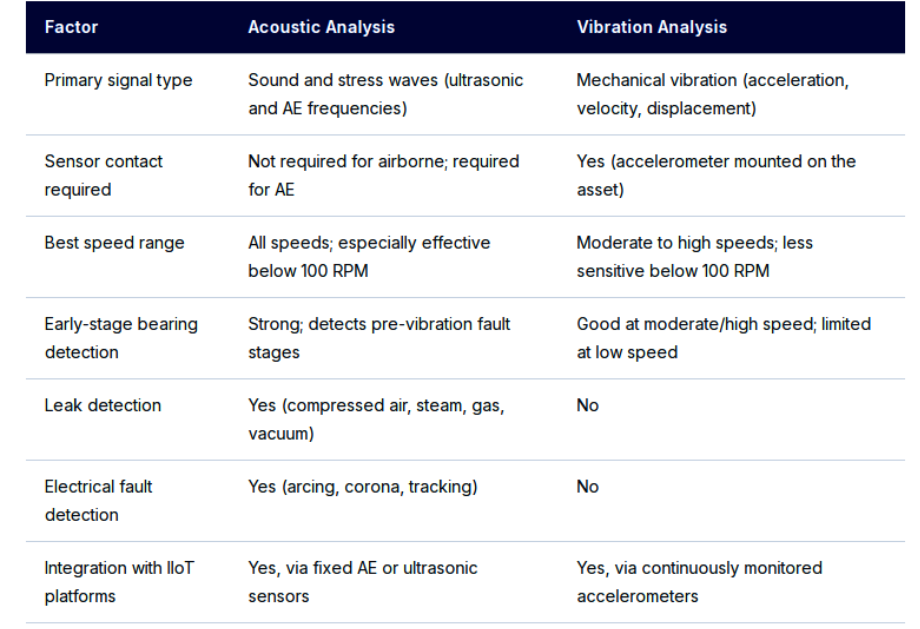
Acoustic analysis and vibration analysis are complementary techniques, not competing ones. Each covers fault types and operating conditions where the other has limitations.
Vibration analysis is the dominant technique for rotating machinery faults: imbalance, misalignment, and bearing damage on equipment running at moderate to high speeds. It is well established, widely deployed, and supported by decades of diagnostic practice.
Acoustic analysis adds value in the cases where vibration is less effective: slow-speed equipment where vibration energy is too low to detect reliably, early-stage lubrication faults before they generate detectable vibration changes, leak detection in pressurized systems, and electrical discharge in switchgear and transformers. In a complete predictive maintenance program, both techniques are used together to cover the full range of fault types of an asset may develop
Acoustic Analysis Equipment
Ultrasonic Detector
A handheld instrument for airborne and structure-borne ultrasonic detection. Used during inspection rounds, the technician scans the target area and listens through headphones while reading a decibel level on the display. Applications include compressed air and steam leak location, early-stage bearing fault detection, and electrical discharge identification. Results are immediate and require no signal processing beyond the instrument's internal heterodyne conversion.
Acoustic Emission Sensor
A contact sensor for structure-borne AE analysis, similar in physical form to an accelerometer but designed for the 100 kHz to several MHz frequency range. AE sensors are mounted directly on the asset and used for slow-speed bearing and gearbox monitoring, pressure vessel and pipeline integrity assessment, and structural crack detection and propagation monitoring.
Acoustic Camera
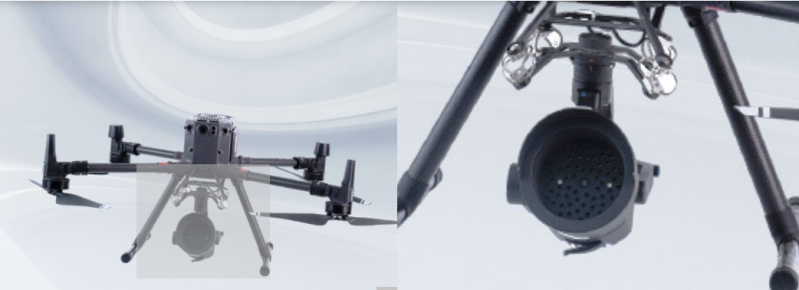
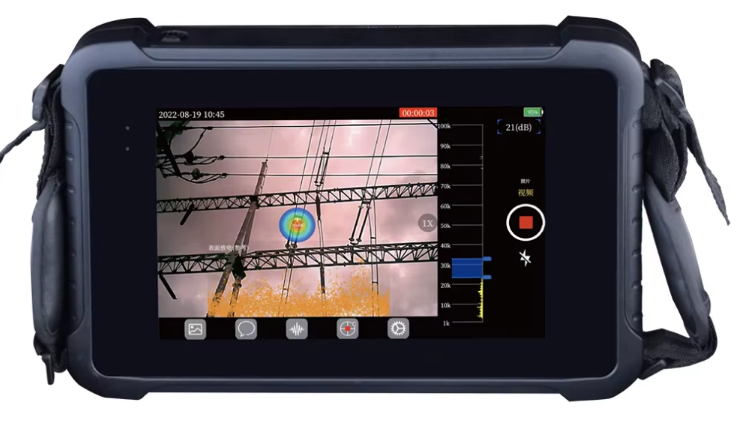
An array of microphones arranged in a fixed geometry that produces a visual overlay showing the loudest sound source in a scene. Used for leak detection surveys across large areas, noise source identification in industrial environments, and quality control applications in manufacturing where sound signatures are linked to assembly quality. The spatial visualization helps maintenance teams prioritize which sources to address first when multiple leaks or noise sources are present.
Frequently Asked Questions
What is acoustic analysis used for in maintenance?
Acoustic analysis is used to detect fault conditions in industrial equipment by measuring sound and acoustic emission signals. Common applications include early-stage bearing fault detection, lubrication monitoring, compressed air and steam leak detection, electrical discharge detection in switchgear, and structural crack monitoring. It is especially valuable for slow-speed equipment and assets where vibration analysis has limited sensitivity.
What is the difference between acoustic analysis and vibration analysis?
Both techniques detect mechanical faults in industrial equipment but work at different frequency ranges and suit different applications. Vibration analysis uses accelerometers to measure low-to-mid frequency vibration (1 Hz to 20 kHz) and excels at detecting imbalance, misalignment, and bearing damage on moderate and high-speed rotating machinery. Acoustic analysis operates at ultrasonic frequencies (above 20 kHz for airborne, up to several MHz for acoustic emission) and is better suited to slow-speed equipment, early lubrication faults, leak detection, and electrical fault detection. The two techniques are complementary in a complete predictive maintenance program.
What is acoustic emission analysis?
Acoustic emission (AE) analysis captures high-frequency stress waves (typically 100 kHz to several MHz) that propagate through solid material when the material deforms, cracks, or undergoes friction. AE sensors are mounted directly on the asset and detect events that would be invisible to vibration sensors. Primary applications include slow-speed bearing monitoring, pressure vessel and pipeline integrity, and structural crack detection.
How does acoustic analysis support predictive maintenance?
Acoustic analysis provides fault signatures at earlier stages than many other techniques. A bearing in the initial stages of degradation may show no change in temperature or vibration but will produce a measurable increase in ultrasonic output. By detecting this change early, maintenance teams can plan an intervention before the fault progresses to a failure, avoiding unplanned downtime. Acoustic data feeds into condition monitoring platforms alongside vibration, temperature, and current signals to build a complete asset health picture.
The Bottom Line
Acoustic analysis is a practical and sensitive tool for detecting fault conditions that are difficult to identify with visual inspection or conventional vibration monitoring alone. For slow-speed equipment, electrical assets, and pressurized systems, it fills gaps that other techniques leave open.
In a complete predictive maintenance program, acoustic analysis sits alongside vibration, temperature, and current monitoring as one of the data streams that feeds the overall asset health picture. Each technique covers fault types the others may miss, and together they give maintenance teams the earliest possible warning before failures occur.